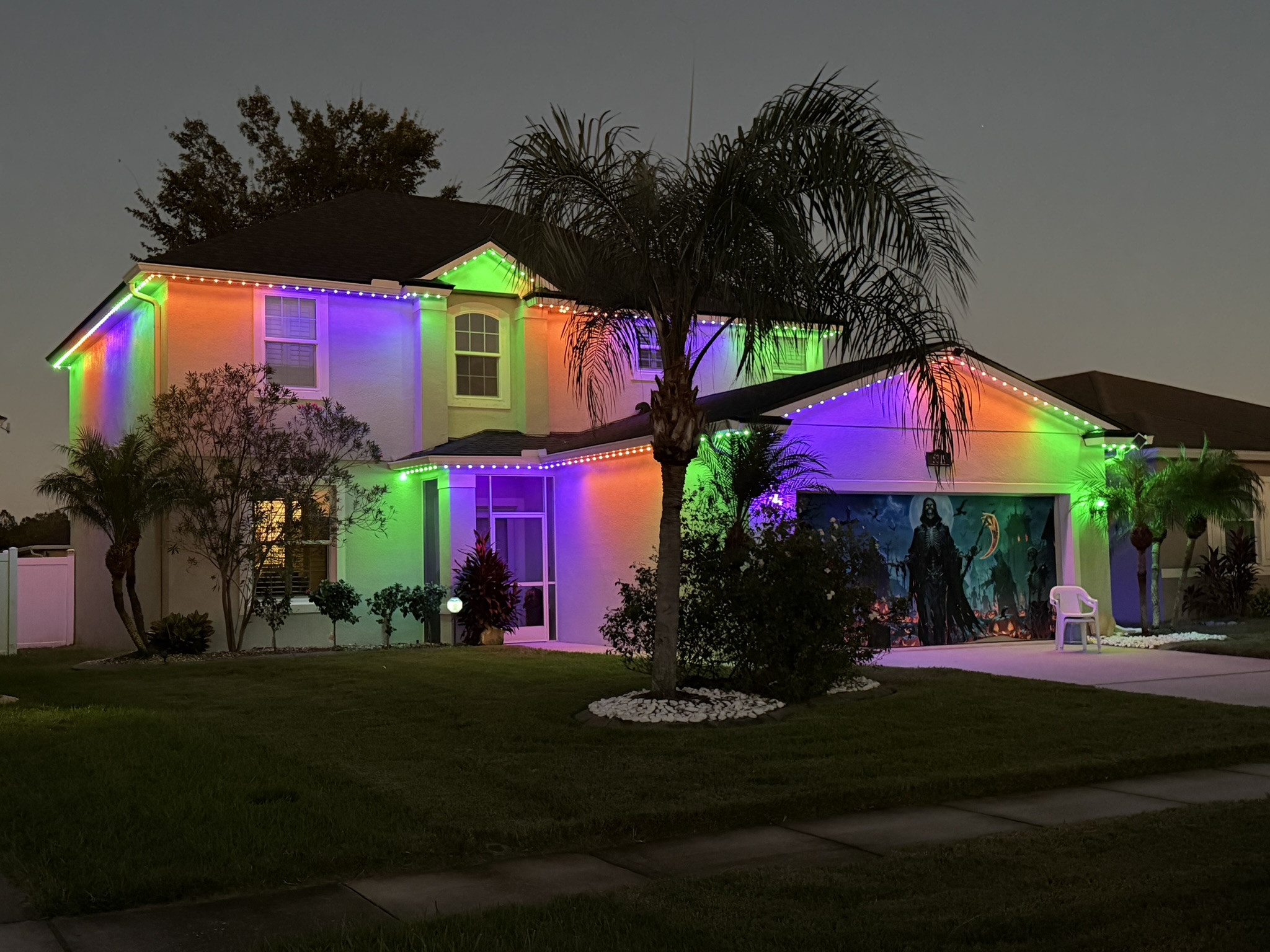
At Total Surface Solutions, our Strata permanent roofline lighting system is engineered to outperform the popular DIY and plug-and-play brands you see online. Our commercial-grade LEDs are rated for long-term service measured in decades, our tracks are built from powder-coated aluminum instead of flexible plastic, and every install is finished with concealed wiring and a low-voltage 48V system. This article explains exactly what makes our system different, and why it is the better long-term choice for Florida homes.
When you compare permanent roofline lighting options, the market is full of products that look similar on a spec sheet but perform very differently once they are mounted on your home. The annual ritual of hanging seasonal strings is replaced by a permanent setup, but not all systems are built the same. In a coastal Florida climate with intense heat, humidity, and salt air, the gap between a professional system like ours and an off-the-shelf Kit becomes obvious within a few seasons. This guide breaks down the key differences so you can see exactly where our Strata system comes out ahead.
What Makes the Strata System Different
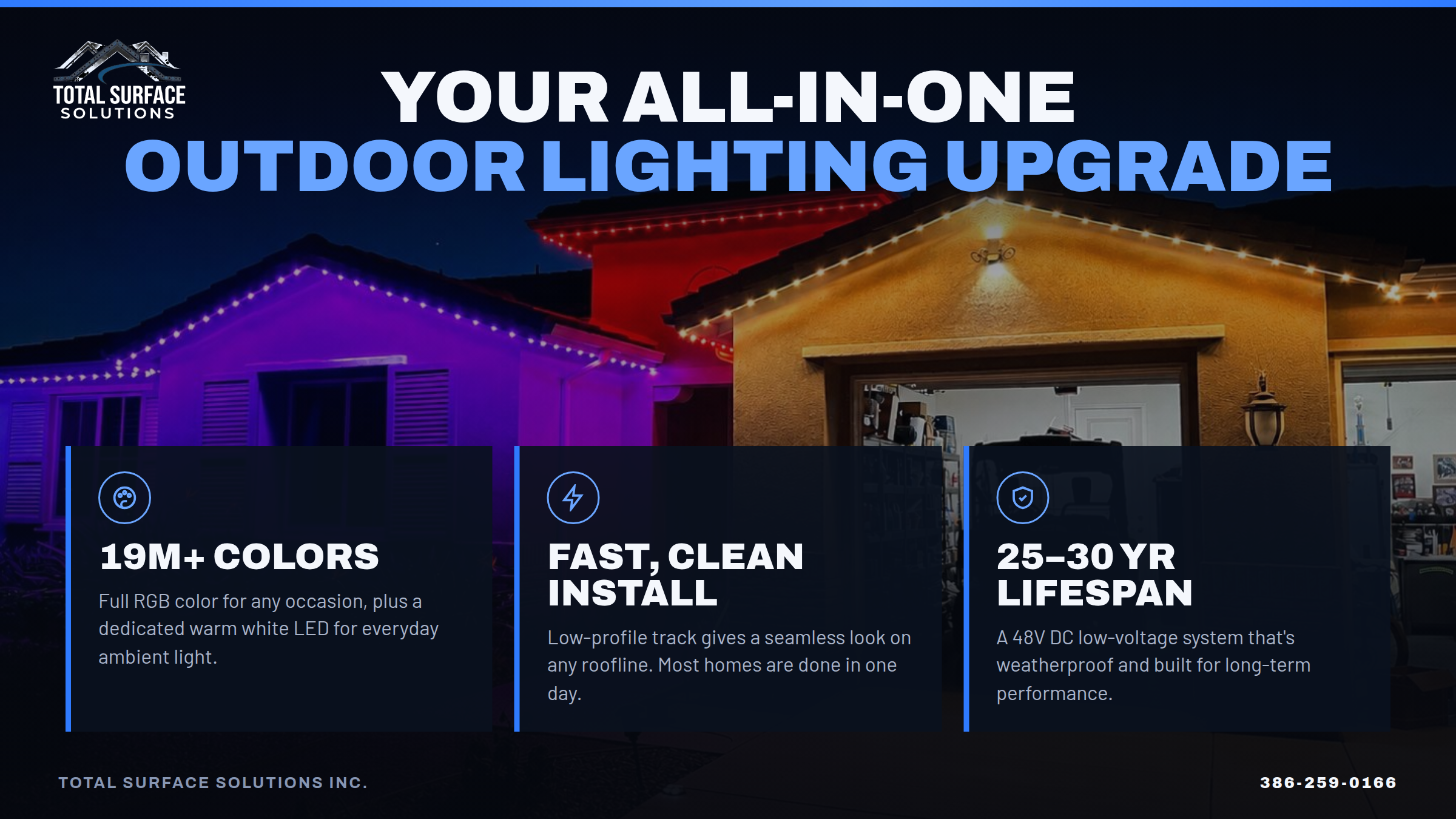
Our Strata system's commercial-grade LED diodes are rated for long-term service measured in decades rather than seasons. Where many DIY kits are rated around 50,000 hours, our professional setup is built on a platform designed for architectural use, so your lighting keeps performing year after year with minimal upkeep.
This longevity creates a massive gap between professional installations and traditional seasonal options. Standard incandescent strings or even basic retail LED strands often fail within a couple of seasons of exposure, while our powder-coated aluminum tracks and weather-sealed connections are made to stay bright.
In the context of our work at Total Surface Solutions, Inc., "permanent" refers to architectural-grade integration. This involves housing the lights within UV-stabilized, powder-coated aluminum tracks that protect the electronics, a step most off-the-shelf brands skip in favor of cheap flexible plastic.
Where Our System Outperforms Competitors
Understanding the engineering behind our system clarifies why it is measured in decades rather than seasons. The primary advantage lies in the build quality of the components. Our LEDs sit in powder-coated aluminum tracks that resist the brittleness and warping that affect the PVC and flexible plastic used by many competing kits.
Protective placement is another critical factor. We mount and conceal the tracks tight to your roofline with no exposed wiring, tucked securely under the eaves or soffit. This positioning shields the electronics from direct sun and rain, while many DIY kits are simply clipped where they are visible and exposed to the elements.
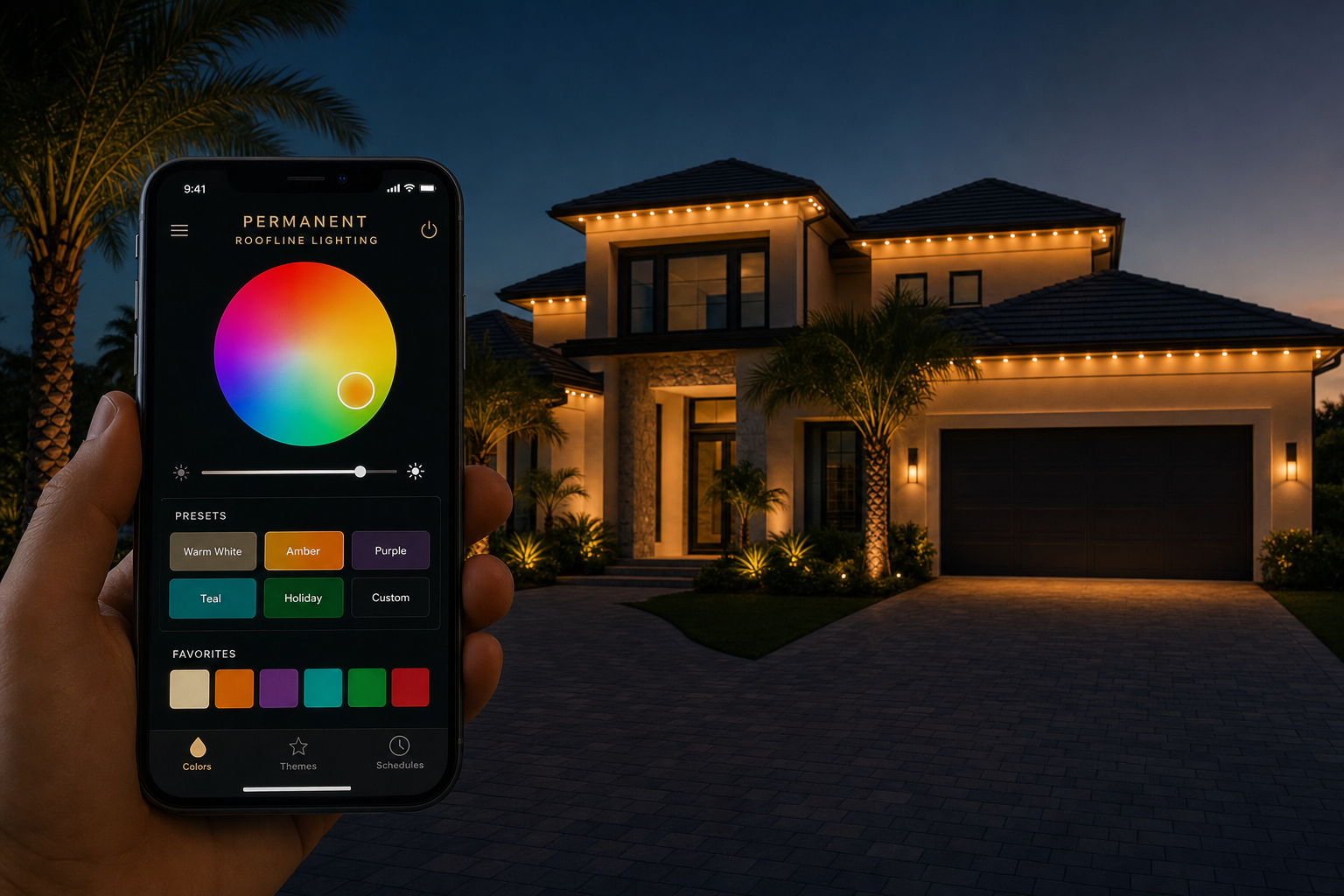
The internal components also differ wildly from off-the-shelf smart lights. Our system runs on a 48V low-voltage, app-controlled setup with more than 19 million RGBWW color options, giving you full control from your phone for holidays, sporting events, and everyday security lighting in a single install you do once.
Feature | Total Surface Solutions | Govee | Jellyfish |
|---|---|---|---|
LED Lifespan Rating | 120,000 hours | ~50,000 hours | ~50,000 hours |
Housing Material | Powder Coated Aluminum | PVC or Flexible Plastic | PVC or Flexible Plastic |
Heat Management | Integrated Metal Heat Sink | None (Trapped Heat) | None (Trapped Heat) |
Power Supply | Commercial Architectural Driver | Standard Wall Plug Transformer | Standard Wall Plug Transformer |
Placement | Protected Under Eaves | Exposed to Gutters/Shingles | Exposed to Gutters/Shingles |
Because we use weather-tight connectors and UV-stabilized materials, our system avoids the brittleness and corrosion common in competitor products. This robust construction is a big part of why our installs stay cleaner and last longer on Florida homes.
Why Professional Materials Win in the Florida Climate
While the internal components of a system provide raw potential, the local environment determines whether that potential is realized. In Florida, the climate quickly separates a professional setup like ours from a plastic kit. Our aluminum tracks and sealed architecture are built for this environment, which is why we back our installs with confidence.
In Palm Coast and throughout Flagler County, the primary threat is solar degradation. The sun’s intense ultraviolet rays are notorious for breaking down polymers in standard plastic lighting strands. Over a few years, these plastics become brittle, yellowed, and prone to cracking, which eventually exposes the delicate wiring inside to moisture. Total Surface Solutions, Inc. mitigates this risk by using high grade, powder coated aluminum tracks. Unlike plastic housing, aluminum does not degrade under UV exposure, maintaining its structural integrity and protecting the diodes for decades. This is the same reason we prioritize high quality materials in our paver restoration work; Florida surfaces must be built to withstand constant solar bombardment.
Coastal regions, particularly in Duval and St. Johns Counties, face the added challenge of salt air. Salt is highly corrosive to inferior metals and exposed electrical connections. If a system uses steel fasteners or low quality alloys, the salt air will cause rust and electrical failure long before the LED itself reaches its 50,000 hour rating. Our professional permanent roofline lighting installations utilize corrosion resistant materials and weather tight seals to prevent salt from penetrating the circuitry. This level of protection is essential for homes within a few miles of the Atlantic.
The physical stability of the system is also tested by Florida's tropical storms and persistent high humidity. While seasonal lights are often loosely clipped to gutters or shingles, professional systems are mechanically fastened to the soffit or fascia. This ensures the lights remain secure during high wind events and are shielded from flying debris. Furthermore, our installation methods account for the extreme humidity common in Volusia County and surrounding areas. By ensuring that every connection is properly insulated and the power drivers are housed in protected enclosures, we prevent the internal condensation that often leads to short circuits in DIY setups. Investing in a system specifically engineered for the Florida coast ensures your exterior lighting remains a permanent fixture rather than a casualty of the next storm cycle.
Routine Maintenance Tips to Maximize Your Investment
While architectural grade systems are built to endure the elements, the maximum permanent roofline lights lifespan is achieved through consistent, simple care. We recommend conducting a visual inspection at least twice a year, ideally during the spring and autumn months. Walk the perimeter of your home during daylight to check the aluminum tracks for any signs of physical obstruction. In Northeast Florida, it is common for small birds or wasps to attempt to nest in the sheltered space of the eaves. Removing these nests early prevents debris from trapping heat around the diodes or obscuring the light output.
Cleaning the system is rarely required, but local environmental factors can occasionally dull the brilliance of the LEDs. In Volusia County, heavy pollen seasons can leave a yellow film on the lenses. If you notice the lights appearing less crisp, gently wipe the covers with a soft, damp microfiber cloth. Avoid using harsh chemical cleaners or high pressure washers directly on the track, as these can damage the protective seals. A simple low pressure rinse with garden hose water is usually sufficient to clear away salt spray or dust. Much like professional cleaning, sanding, and sealing for your driveway, keeping your lighting components clear of buildup prevents long term surface degradation and ensures the light remains unobstructed.
Maintaining the software side of your system is just as important as the hardware. Most modern permanent roofline lighting systems operate via dedicated smartphone apps. Keep these applications and the controller firmware updated to ensure seamless connectivity and to access new lighting patterns or security features. If you notice a specific section of lights flickering or appearing dimmer than the rest, contact a professional rather than attempting to open the track yourself. Professional technicians can perform a voltage drop test or check for wire fatigue, ensuring your investment continues to perform safely for its full intended duration.
Professional Installation vs. DIY: Impact on System Longevity
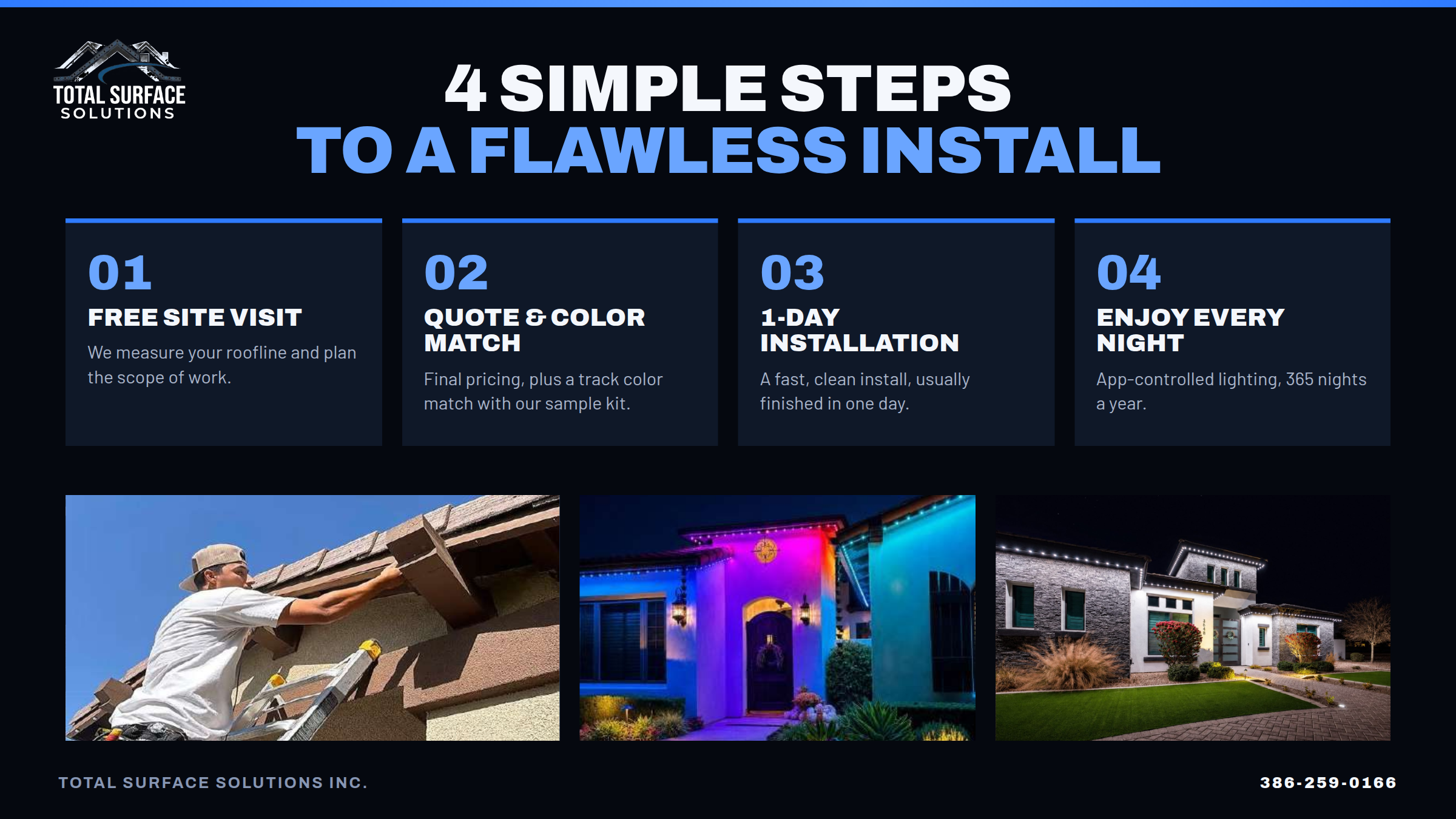
The ultimate factor in the permanent roofline lights lifespan is the precision of the initial install. DIY kits often rely on generic, one size fits all connectors and light duty power adapters that struggle with the specific electrical demands of a full home perimeter. When a system fails after just two or three years, the culprit is rarely the LED diode itself; it is typically a corroded splice or a burnt out driver. Total Surface Solutions, Inc. avoids these common points of failure by utilizing architectural grade power supplies that are engineered to handle the thermal fluctuations of the Florida climate without losing efficiency.
Professional installation centers on meticulous wire management. We use custom cut, heavy gauge wiring and marine grade heat shrink tubing to seal every connection point against moisture intrusion. This is critical in Duval and St. Johns Counties, where humidity and salt air can rapidly oxidize exposed copper. Furthermore, we calculate the specific electrical load for each run to ensure the voltage remains consistent from the first light to the last. This balanced load prevents the driver from overworking and protects the diodes from premature burnout caused by uneven power distribution. By opting for a professional permanent roofline lighting installation, you are securing a system where every component, from the mounting fasteners to the internal circuitry, is synchronized for decades of reliable use.